TLDR: El Cajon to SAN is 17–19 miles on I-8 West — plan 30 minutes off-peak, 55–75 minutes during the 7–9 AM rush, and always add 15–20 minutes for curbside group unloading. Terminal 1 (the new NT1) and Terminal 2 are on different sections of the upper-level Departures road; commercial vehicles drop at the departures curb and cannot idle on the arrivals level — stage first, then call the vehicle only after every passenger has their bag.
Here is the scenario nobody thinks through in advance: your group of 18 has flights out of San Diego International at 8:15 AM. Everyone agreed to leave by 5:45 AM from El Cajon. But then it is 5:35 and someone is still at the elevator with their bag, and by the time the bus pulls away from the hotel it is 5:52.
I-8 westbound at that hour is still manageable. By 6:30 AM the Mission Valley corridor is tightening. By 7:00 AM, the interchange where I-8 meets I-15 is stacking.
For a group of 18 with an 8:15 AM flight and checked luggage, that delay is not recoverable — and splitting into four separate cars that got separated leaving the parking lot does not solve it.
That is the specific problem a single charter bus or party bus rental solves for groups leaving El Cajon: one vehicle, one departure window, one curbside drop at the right terminal, and nobody sprinting through SAN because the last rideshare ran 12 minutes late. This guide covers every practical layer of the El Cajon to SAN transfer — the I-8 traffic reality with specific timing, how SAN splits groups between terminals, how curbside drop-off works at each departures level, how luggage volume changes the vehicle decision, and how the airport's arrivals-side rules shape the return pickup. For the full range of El Cajon airport transportation options, the service page covers every vehicle type available.
The I-8 West Run: Distance, Timing, and Where Morning Traffic Actually Builds
San Diego International Airport sits about 17 to 19 miles west of El Cajon along I-8. In the middle of the afternoon that distance takes 30 minutes. On a weekday morning between 6:30 and 9:00 AM, the same route can take 55 to 80 minutes — and the difference between those two numbers is not evenly distributed across the drive.
Almost all of the delay concentrates at two specific points.
The first is the I-8/I-15 interchange in Mission Valley. Westbound I-8 and I-15 traffic merge at one of the more compressed interchange configurations in the county, and from roughly 6:45 AM onward that corridor stacks reliably. The second is the stretch through Hotel Circle and Fashion Valley, where I-8 narrows and on-ramp traffic from Mission Valley's commercial corridor feeds into an already saturated lane.
Once you clear the Fashion Valley section and reach the I-8/I-5 junction, traffic usually loosens — but by then a significant chunk of your morning buffer is gone.
| Departure window from El Cajon | I-8 westbound condition | Realistic drive time to SAN | Flight-time guidance |
|---|---|---|---|
| 3:30 AM – 5:00 AM | Free-flowing | 27–33 min | Best window for flights departing 5:30–6:45 AM |
| 5:00 AM – 6:15 AM | Light; Mission Valley building | 32–42 min | Comfortable for 7:00–7:45 AM flights with a 90-min terminal buffer |
| 6:15 AM – 7:30 AM | Moderate to heavy; I-8/I-15 interchange backs up | 48–68 min | Add at least 25 extra minutes — do not plan a tight connection |
| 7:30 AM – 9:00 AM | Peak; Mission Valley and Hotel Circle can fully stop | 58–80 min | For 9:00–10:30 AM flights, leave El Cajon no later than 7:00 AM |
| After 9:15 AM | Clearing, moderate | 35–48 min | Standard 90-min buffer is workable for most midday domestic flights |
For a group with checked luggage, add 15–20 minutes onto any drive-time figure above. A 20-person group unloading at the SAN departures curb — bags out of the undercarriage bays, everyone accounted for, rolling toward the terminal doors — takes meaningfully longer than a solo traveler pulling a carry-on out of a rideshare. The curbside at SAN is actively managed; the vehicle must keep moving.
Smooth logistics on the curb requires that the group has its unload sequence planned before the vehicle pulls in.
Groups headed to SAN from eastern El Cajon near Mollison Avenue or Fletcher Parkway board I-8 West and stay on it straight through to the I-8/I-5 junction, then north a short distance to the airport exits at Grape Street or Laurel Street before dropping down to North Harbor Drive and the terminals. There is no meaningfully faster alternate. SR-94 West is an option from the southern edge of El Cajon, but it has its own pinch points approaching I-5 and does not reliably beat I-8 for the terminal approach.
For most El Cajon groups, I-8 West is the route — the variable is only the departure window.
Which Terminal Does Your Group Need at SAN?
San Diego International Airport operates two terminal zones. The New Terminal 1 (NT1) opened Phase 1 in May 2024, replacing the original Terminal 1 as part of the airport's $3.4 billion expansion project. Terminal 2 remains split into East (T2E) and West (T2W) concourses, handling the bulk of the major carriers.
Because the NT1 project is progressing through additional phases and airline gate assignments continue to shift, the single most important pre-trip step is confirming your terminal on the official SAN terminal maps page before your group loads the bus.
Why does terminal ID matter enough to include in a transportation guide? Because the NT1 departures curb and the Terminal 2 departures curb are on different sections of the upper-level roadway. Pulling up at the wrong terminal with 22 people and their bags means a walk, a re-routing, or a re-queue on a curb that does not slow down for latecomers.
One check on the SAN website the night before — confirming your airline is still in the terminal you remember from your last trip — takes 60 seconds and prevents a much longer detour.
Southwest Airlines was among the first carriers to move into the NT1 when Phase 1 opened. Terminal 2's East and West concourses serve American Airlines, Delta, United, Alaska, and several others. But those assignments will continue to evolve as the NT1 expansion adds gates — always use the official SAN terminal page as your source, not this guide or any cached screenshot from a previous trip.
Charter Bus & Party Bus Drop-Off at SAN: What the Upper-Level Departures Curb Actually Requires
At San Diego International Airport, all commercial vehicles — including charter buses, party buses, and minibuses — use the upper-level Departures roadway for group drop-off. The procedure at both Terminal 1 (NT1) and Terminal 2 is the same: the vehicle pulls to the designated commercial vehicle zone in the departures lane, the group unloads with their luggage, and the vehicle clears the curb. No idling, no waiting while the last passenger finds their bag, no staging at the curbside after the group is out.
For Terminal 1 (NT1), the new departures roadway was designed with wider commercial vehicle zones than the original terminal, but the no-idle enforcement is consistent. For Terminal 2, the upper-level commercial vehicle lanes are adjacent to the rideshare zones but clearly separate — the approach is managed by airport staff during peak departure hours. The SAN ground transportation page maintains the current commercial vehicle zone layout for both terminals; check it before your trip as the NT1 phases alter traffic patterns on the upper level.
What this means in practice: before the bus arrives at the airport, the group needs a plan. Bags come out of the undercarriage bays first. Each person confirms their own luggage.
The group moves off the curb immediately after unloading. Anyone who needs extra time with an oversized item or mobility assistance should be positioned near the vehicle exit for a fast unload. A 25-person group that runs that sequence smoothly clears the curb in three to four minutes.
A 25-person group where four people are still looking for their bags when the vehicle pulls up takes twice that — and the bus cannot sit there while it happens.
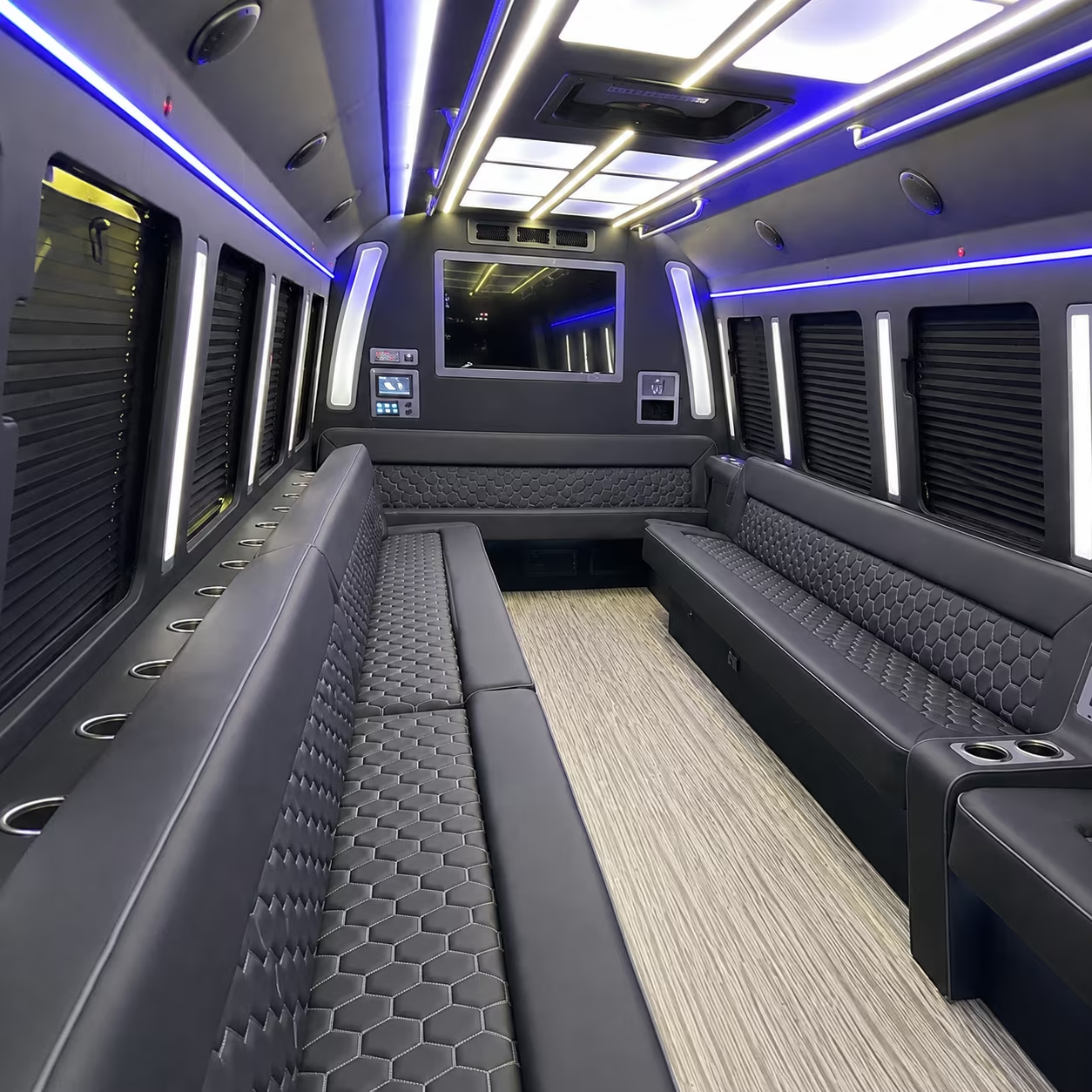
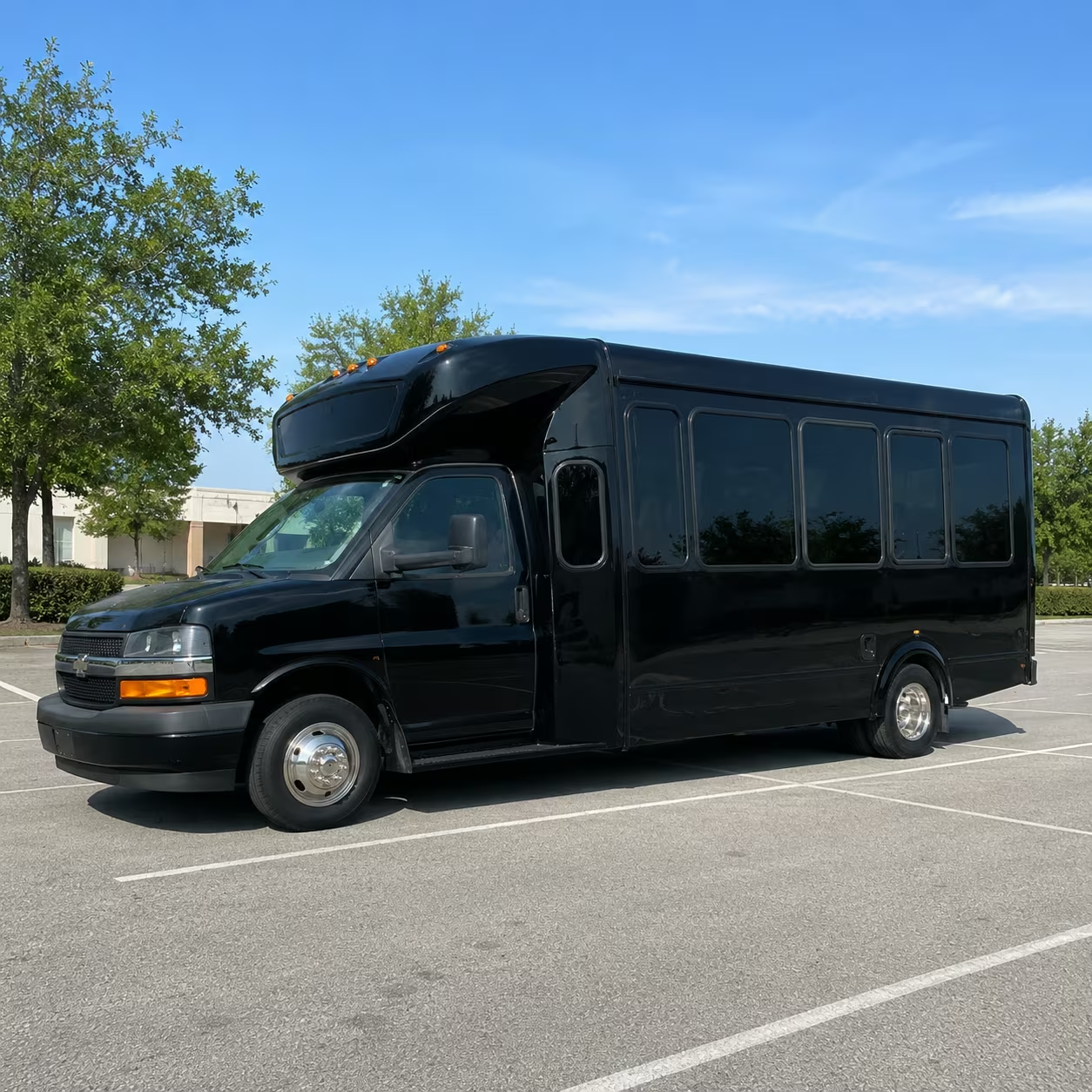
Party buses in the 15–35 passenger range handle SAN departures drops without issue; the vehicle pulls to the upper-level commercial curb just as a charter bus does, and the group unloads the same way. For groups where the departure is itself a celebration — a bachelorette trip to Las Vegas, a birthday group flying to a destination — the party bus option keeps the energy going on the drive to the airport before the group splits at the terminal. The 15–35 passenger minibus and the 40–56 passenger charter bus both handle the upper-level Departures approach at SAN; the right choice depends on headcount and, more specifically, how much luggage your group is actually bringing.
Luggage Space by Group Size: Matching the Vehicle to What Your Group Is Actually Carrying
The El Cajon to SAN run is almost always a checked-luggage trip. That changes the vehicle math more than headcount alone does. A group of 14 people with carry-ons and a single personal item each fits differently than a group of 14 people each rolling a 28-inch checked bag plus a personal item to the airport.
Here is how the vehicle options stack up against real luggage loads:
| Vehicle | Passenger capacity | Luggage capacity | Best for |
|---|---|---|---|
| Sprinter Van Rental with Driver | Up to ~14 | Rear cargo area — good for light packers, manageable for one checked bag each, limited for two bags per person | Small groups on domestic short-haul trips, corporate one-day travel, groups where carry-ons dominate |
| 15–35 passenger minibus | 15–35 | Overhead bins plus some underfloor storage — solid for one checked bag per passenger, tighter for heavy double-checked luggage | Mid-size groups, weekend getaways, groups with a mix of carry-on and checked bags |
| 40–56 passenger charter bus | Up to 56 | Deep undercarriage bays — the only vehicle that handles two large checked bags per passenger for a group of 30-plus without compromising the cabin | Large groups, cruise departure runs, international travel groups, sports teams with equipment, any group where luggage volume is a planning variable |
The undercarriage bays on a full-size charter bus are the practical reason most large groups choose the motorcoach for airport runs rather than multiple minibuses. A group of 32 people traveling to a family reunion in Hawaii, each checking two 50-pound bags, needs those bays — trying to fit that luggage volume into the overhead and floor space of a minibus produces a cabin where nobody can move and a curbside unload that takes twice as long. The charter bus bays load at the El Cajon pickup, and everything rolls out at the SAN departures curb in a controlled sequence rather than a pile.
For groups headed out on a major trip — an international flight, a cruise departing from Los Angeles or a port requiring an overnight stay, a ski trip with gear — the full-size charter bus is also the vehicle that gives everyone an onboard restroom and power outlets for the early-morning ride. A 5:00 AM departure from El Cajon with 40 people and no restroom for a 45-minute drive is a detail that seems fine in planning and feels different in practice.
Groups from El Cajon heading out after a night at one of the East County casinos — wrapping up a stay at Sycuan Casino Resort or Viejas Casino & Resort before flying home — often use the same vehicle for both the casino trip and the airport transfer, booking a multi-leg itinerary that ends at SAN on departure morning. That is the most efficient use of a single charter bus rental for groups visiting El Cajon before flying out.
The Return Leg: How SAN's Arrivals Pickup Rules Shape Your Plan
Getting the group from El Cajon to the SAN departures curb is the manageable half of this trip. The return leg — coordinating a vehicle pickup for an arriving group at SAN — has a specific set of operational rules that catch groups off guard every time they skip this section of the planning.
At San Diego International Airport, commercial vehicles are not permitted to idle or wait at the arrivals curb. The lower-level Arrivals/Baggage Claim roadway is managed identically to the upper-level departures road — vehicles move through, they do not park. This means a charter bus or party bus picking up your group after landing cannot pull to the Terminal 2 arrivals curb and wait while 20 people find their bags at the carousel.
The vehicle must stage in the designated commercial vehicle holding area and move to the curb only after every passenger has their luggage and is physically at the arrivals curb, ready to board.
The sequence that consistently works:
- The flight lands and the group makes its way to baggage claim.
- Every bag is off the carousel. Every passenger is accounted for, including anyone on a connecting flight.
- The entire group moves to the designated arrivals curb for their terminal and assembles together.
- Only then does the group contact call to release the vehicle from staging.
- The vehicle arrives within a few minutes, the group boards, luggage goes into the bays or overhead, and the vehicle clears the curb.
If the vehicle is called before the group is assembled — while the last bag is still on the carousel, or while one person is still in the restroom — the vehicle arrives at the curb, waits until airport operations waves it off, and has to circuit again before it can return. That loop adds 10–20 minutes in normal conditions and more on a heavy arrival day. One discipline — call after bags, not before — eliminates it entirely.
The official SAN ground transportation page maintains the current commercial vehicle staging zone and arrivals pickup locations for both Terminal 1 (NT1) and Terminal 2. Check it before the return date, particularly given that the NT1 expansion continues to shift traffic flow patterns on the lower level. The core rule does not change: stage first, call when ready.
For groups returning to El Cajon from a trip — particularly groups that flew home from a major event and want a direct shuttle rather than coordinating rideshares across the county at 10:30 PM — the return pickup through El Cajon airport transportation works cleanly once the staging rule is understood. Build the pickup call into the group's communication plan before anyone boards the inbound flight, and the return leg handles itself.
What Size Bus or Party Bus Rental Works for Your El Cajon Group?
Not every El Cajon to SAN group is the same trip. A 14-person family heading to a Mediterranean cruise is a different vehicle conversation than a 45-person corporate group flying out for a national conference. Here is how the vehicle options match up across common El Cajon group sizes:
For 6–14 passengers with standard luggage, the Sprinter Van Rental with Driver covers the headcount cleanly and maneuvers the upper-level SAN departure curb more easily than a full-size motorcoach. For 15–30 passengers, a 15–35 passenger minibus is the right size — no paying for 20 empty seats in a charter bus, and the vehicle handles the airport approach roads without the turning radius of a 45-foot motorcoach. For groups of 30 or more, or any group where heavy checked luggage is a factor regardless of headcount, the 40–56 passenger charter bus is the practical answer.
The undercarriage bay space is the deciding factor, and for pre-dawn departures, the onboard restroom becomes genuinely important at group sizes where the drive is long enough to matter.
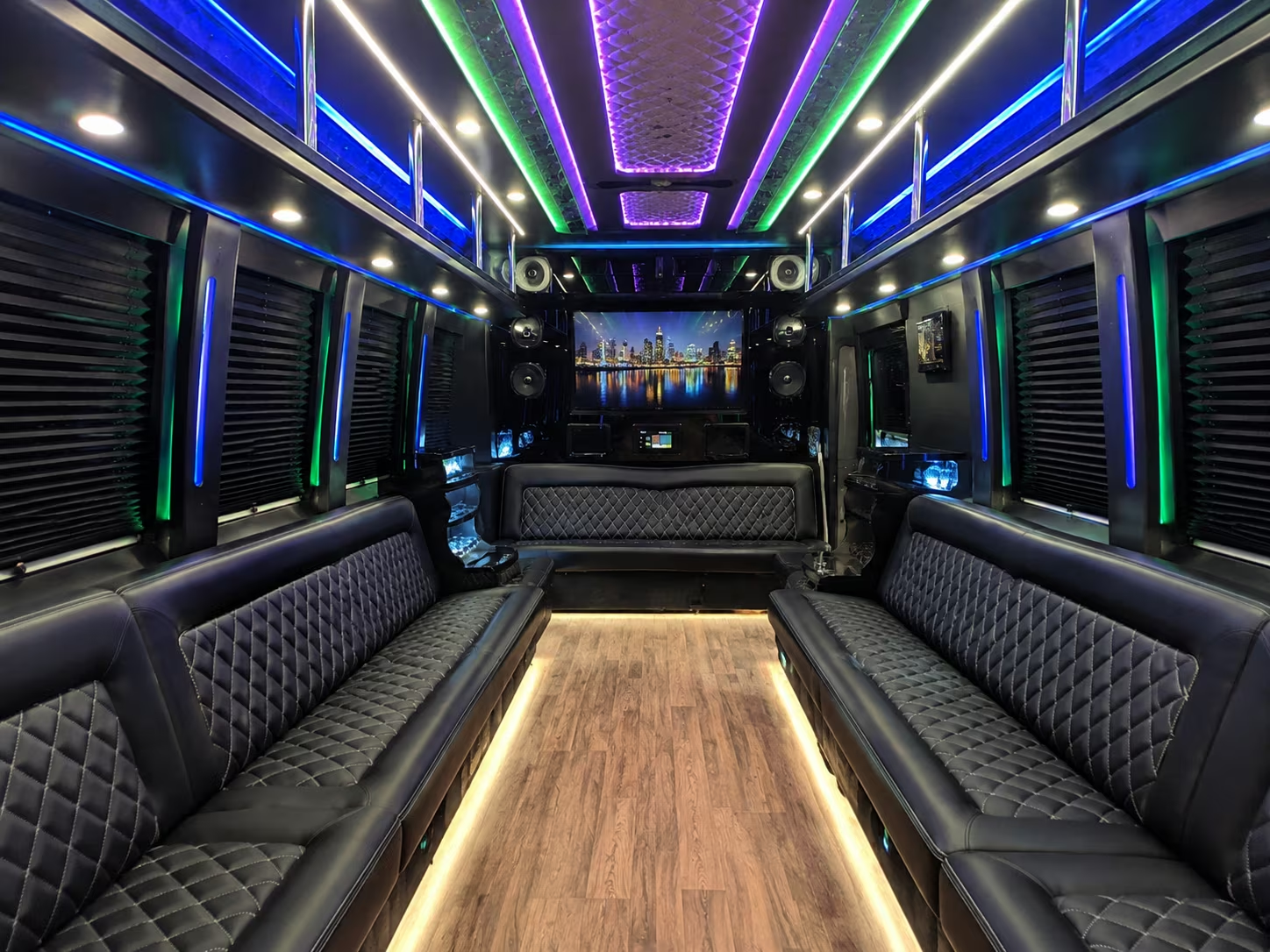
Party buses in the 15–50 passenger range are a natural fit for airport trips that are also a sendoff — bachelorette parties flying somewhere for the weekend, birthday groups heading to a destination, sports teams traveling to a tournament. The party bus handles the SAN departures drop identically to a charter bus, and the LED lighting, built-in bar, and sound system mean the celebration does not have to wait until the gate. For corporate groups doing airport transfers as part of a multi-day visit to El Cajon — a group that came in for a show at The Magnolia or a concert at North Island Credit Union Amphitheatre — the charter bus handles the return airport leg without any drama.
El Cajon to SAN Party Bus and Charter Bus Rental Prices
The price of an El Cajon to SAN group transfer depends on vehicle size, how many hours the vehicle is needed (pickup time, the drive, the curbside unload, and whether the vehicle is also handling a return arrival pickup), and your travel date. To give you an idea — these are rough planning ranges, not market data or a guaranteed quote — a one-way SAN airport transfer from El Cajon in a Sprinter van for 10–13 people might run $170–$310; a 20–30 person minibus or party bus $260–$440; and a 40–56 passenger charter bus for large group transfers $360–$620 for a one-way run. Round-trip packages covering both the departure drop and the arrival pickup are available and typically more cost-effective than two separate quotes.
The per-person comparison is where one bus consistently makes sense. A 30-person group in a single charter bus at $400 works out to roughly $13 per head. Splitting 30 people across eight rideshares — at $30–$55 each at 5:30 AM with surge pricing — runs $240–$440 in ride fees alone, with no coordination control if three cars get separated at the I-8 on-ramp and one of them misses the flight window.
One vehicle, one departure, one curbside sequence. For more current pricing guidance, see the El Cajon party bus prices page, or call 858-379-7810 for a free, all-inclusive quote at no obligation.
When to Request Estimates: Booking Windows for SAN Transfers from El Cajon
For most El Cajon to SAN airport transfers, a one-to-three week lead time is workable on standard dates. But San Diego has several annual windows when vehicle availability for group transfers tightens significantly — and the El Cajon to SAN route sits squarely in that demand picture.
- Comic-Con International (late July at the San Diego Convention Center) is the single highest-demand week for group transportation in San Diego County. Groups leaving town after the convention are competing with tens of thousands of other attendees all headed to SAN within a 48-hour window. Book 4–6 weeks out if your group is flying home after Comic-Con.
- Holiday travel blackouts — Thanksgiving (Tuesday and Sunday), Christmas Eve through New Year's Day, and Memorial Day weekend — are SAN's peak passenger periods. Vehicles for group transfers fill out weeks in advance. Get started early or expect to see limited options at higher rates.
- SDSU graduation (typically May) sends large numbers of family groups to SAN, and the simultaneous demand for airport shuttles from across the county is real. If your El Cajon group is flying in for graduation and flying home that weekend, the vehicle needs to be confirmed early.
- Concert weekends at North Island Credit Union Amphitheatre — particularly Friday and Saturday shows with major acts drawing 20,000-plus — push group transportation demand across the South Bay and East County. Groups attending a show and departing from SAN the next morning are the most time-sensitive and the most likely to be caught by late booking. See the full concert night transportation guide for how those logistics typically run.
Outside those peak windows, two to three weeks is generally fine for a standard airport transfer. The earlier the vehicle is confirmed, the less the departure morning has one more moving part. Call 858-379-7810 or use the online quote tool to check availability for your specific date — results come back in under 30 seconds.
Frequently Asked Questions: El Cajon to SAN Group Transfers
How long does the I-8 drive from El Cajon to SAN actually take in the morning?
Before 6:15 AM, the drive typically runs 27–38 minutes. Between 6:15 and 9:00 AM westbound, Mission Valley congestion — especially around the I-8/I-15 interchange — routinely pushes the drive to 48–80 minutes. For morning flights, build in the upper end of that range plus 15–20 minutes for curbside group unloading.
If your flight departs before 8:30 AM, a pre-6:00 AM departure from El Cajon is not early; it is the standard-practice window to stay ahead of Mission Valley traffic.
Which terminal at SAN does my group use?
SAN has the new Terminal 1 (NT1, opened May 2024) and Terminal 2, split into East and West concourses. Airline terminal assignments continue shifting as the NT1 expansion adds phases. Always confirm your terminal on the official SAN terminal maps page the day before your trip — do not rely on where your airline was a year ago, particularly if your last SAN trip was before mid-2024.
Can the charter bus or party bus wait at SAN arrivals while the group gets bags?
No. Commercial vehicles cannot idle at the SAN arrivals curb. The vehicle stages off-site and moves to the arrivals curbside only after every passenger has their luggage and the full group is assembled at the curb, ready to board. Call the vehicle at that point — not while anyone is still at the carousel.
That sequencing eliminates the 10–20 minute penalty of a vehicle arriving at an empty curb and having to circuit again.
What is the best vehicle for a group of 22 flying out of El Cajon?
For 22 passengers with standard checked luggage, a 15–35 passenger minibus handles the headcount. If most of those 22 people are traveling with two pieces of checked luggage each — heavy bags plus a personal item — a full-size charter bus with undercarriage bays is the more practical choice. The bays solve the luggage problem clearly; trying to fit 44 checked bags into a minibus's overhead and floor space slows the curbside unload and crowds the cabin on the way to the airport.
Is there an alternate route from El Cajon to SAN besides I-8?
I-8 West is the standard route for good reason — it is the most direct and its congestion is at least predictable and timed. SR-94 West is an option for groups departing from the south side of El Cajon, connecting to I-5 further downtown, but SR-94 has its own pinch points approaching the harbor and does not reliably reduce total travel time to the terminal. For nearly every El Cajon group, I-8 West to I-5 North to Harbor Drive is the correct route, and the departure-time buffer from the table above is the right planning tool.
Can I book a round-trip package covering both the El Cajon departure and the SAN arrival pickup?
Yes — round-trip packages that cover both legs are available through transportation providers serving El Cajon. A single arrangement handles the outbound departure and the return arrival pickup, which is typically more cost-effective than two separate one-way quotes and eliminates re-booking on the return. Call 858-379-7810 to get the full-trip details sorted out.
How much does a group charter bus or party bus to SAN cost from El Cajon?
To give you an idea of the range: a Sprinter van for 10–13 passengers runs roughly $170–$310 one-way; a 20–30 person minibus or party bus $260–$440; a 40–56 passenger charter bus $360–$620 for a one-way transfer. Those figures vary by date, vehicle availability, total hours reserved, and whether the package includes a return pickup. For all-inclusive pricing based on your actual group, call 858-379-7810 or use the online quote tool — results in under 30 seconds.
Does elcajonpartybuscompany.com cover other El Cajon transportation beyond airport transfers?
Yes — elcajonpartybuscompany.com covers the full range of East County and greater San Diego group trips alongside SAN airport transfers: gaming nights to Barona Resort & Casino or Viejas Casino & Resort, wedding shuttles, corporate group transfers, and evening transportation to venues like The Magnolia. The El Cajon group transportation services page has the complete picture.
Find Your El Cajon to SAN Airport Shuttle
The I-8 run from El Cajon to San Diego International is a straightforward drive — until it is 7:05 AM, the I-15 interchange is a parking lot, and 20 people are staring at their boarding passes. One charter bus or party bus rental removes every variable that turns a morning airport run into a morning emergency: one departure window, one vehicle, one coordinated drop at the right terminal, and the curbside unload happening exactly the way the airport requires it.
elcajonpartybuscompany.com helps groups in El Cajon and across East County compare Sprinter vans, party buses, minibuses, and full-size charter buses sized to the actual group and the actual luggage load. Call 858-379-7810 any time for a free, all-inclusive price quote at no obligation, or use the online quote tool to compare options and see pricing in under 30 seconds. Get your estimates today and get your departure morning down to one confirmed vehicle.